Other grades of this product :
| BRASSICASTEROL Basic information |
| BRASSICASTEROL Chemical Properties |
| Melting point | 205-213℃ | | Boiling point | 488.7±14.0 °C(Predicted) | | density | 0.99±0.1 g/cm3(Predicted) | | storage temp. | 2-8°C | | solubility | Chloroform (Slightly), Ethyl Acetate (Slightly), Methanol (Slightly) | | form | Solid | | pka | 15.03±0.70(Predicted) | | color | White to Off-White |
| WGK Germany | 3 | | HS Code | 29061310 |
| BRASSICASTEROL Usage And Synthesis |
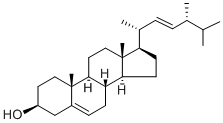
| Uses | A phytosterol found in canola oil, rapeseed oil, marine algae and shellfish. This compound has been shown to inhibit sterol Δ24-reductase, an enzyme involved in the mammalian cholesterol biosynthesis pathway. | | Uses | Brassicasterol was used as standard to analyze the sterols from mussels sample by thin layer chromatography. | | General Description | Brassicasterol is a plant sterol, sharing similar structure with cholesterol. It is obtained through the dietary sources, including sea food. | | Biochem/physiol Actions | Brassicasterol is a plant sterol, structurally similar to cholesterol. Plant sterols compete with cholesterol and reduce the content of cholesterol incorporated into micelles thereby reducing its absorption. Brassicasterol reportedly decreases the progression of atherosclerosis. The level of brassicasterol in cerebrospinal fluid may be used as a prognostic factor for progression of Alzheimer′s disease. |
| BRASSICASTEROL Preparation Products And Raw materials |
|


 日本语
日本语 한국어
한국어 Français
 Deutsch
 España
 Türkiye