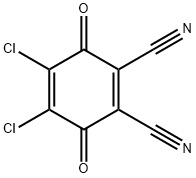
| Melting point | 210-215 °C (dec.)(lit.) |
| Boiling point | 301.8±42.0 °C(Predicted) |
| density | 1.7500 (estimate) |
| storage temp. | Store below +30°C. |
| solubility | Soluble in benzene, methanol, acetic acid and dioxane.Slightly soluble in chloroform,, dichloromethane. |
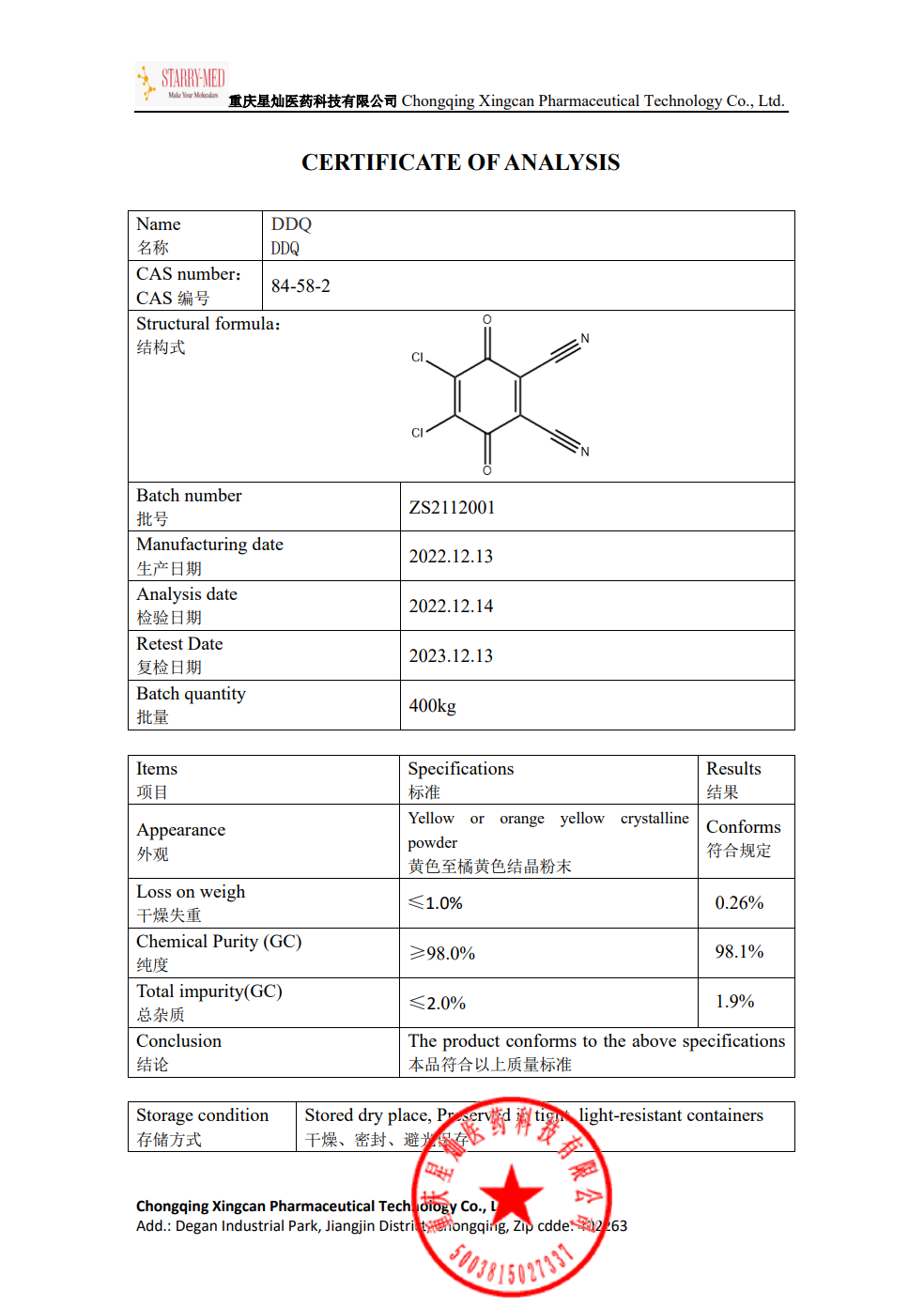
| form | Crystalline Powder or Crystals |
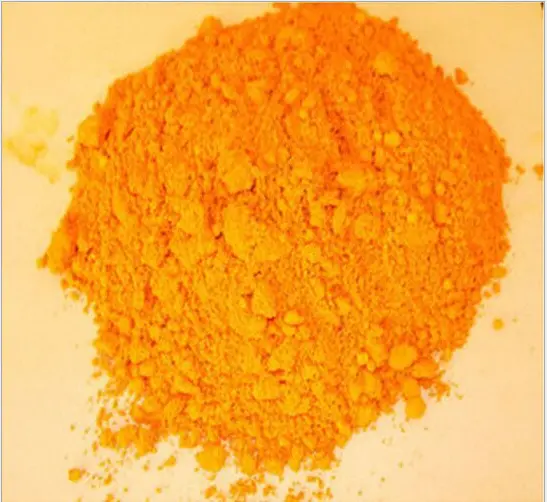
| color | Yellow to orange |
| Water Solubility | reacts |
| Sensitive | Moisture Sensitive |
| Merck | 14,3063 |
| BRN | 747939 |
| InChIKey | HZNVUJQVZSTENZ-UHFFFAOYSA-N |
| CAS DataBase Reference | 84-58-2(CAS DataBase Reference) |
| NIST Chemistry Reference | 1,4-Cyclohexadiene-1,2-dicarbonitrile, 4,5-dichloro-3,6-dioxo-(84-58-2) |
| EPA Substance Registry System | 1,4-Cyclohexadiene-1,2-dicarbonitrile, 4,5-dichloro-3,6-dioxo- (84-58-2) |
2,3-Dichloro-5,6-dicyano-1,4-benzoquinone (DDQ) has a variety of applications. DDQ is a deprotection agent for ketals, acetals, and thioacetals. It is a useful electron transfer reagent for synthesis of quinolones and an oxidizing agent used to synthesize steroids. Additionally, DDQ is used with Ph3P to synthesize 1,2-benzisoxazoles.
An oxidizing agent, especially in steroid synthesis.
2,3-Dichloro-5,6-dicyano-1,4-benzoquinone is used as a reagent for oxidative couplings and cyclization reactions and dehydrogenation of alcohols, phenols and steroid ketones. It is also used in the synthesis of 1,2-benzisoxazoles. It is a useful electron-transfer reagent for synthesis of quinolines from imines and alkynes or alkenes.
Please leave a message for us or use the following ways to contact us, we will reply to you as soon as possible, and provide you with the most sincere service, thank you.


 日本语
日本语 한국어
한국어 Français
 Deutsch
 España
 Türkiye